What Is a Penny Composed Of? Facts About US Coinage
Does your pocket change feel lighter than it used to? You might be surprised to learn that the “copper” coins you handle every day are mostly hidden zinc. Many people assume pennies are solid copper, leading to confusion when coins corrode or reveal a silvery center. This guide clarifies exactly what is a penny composed of so you can identify your coins with expert precision.
The Modern Recipe: What Is a Penny Composed Of Today?
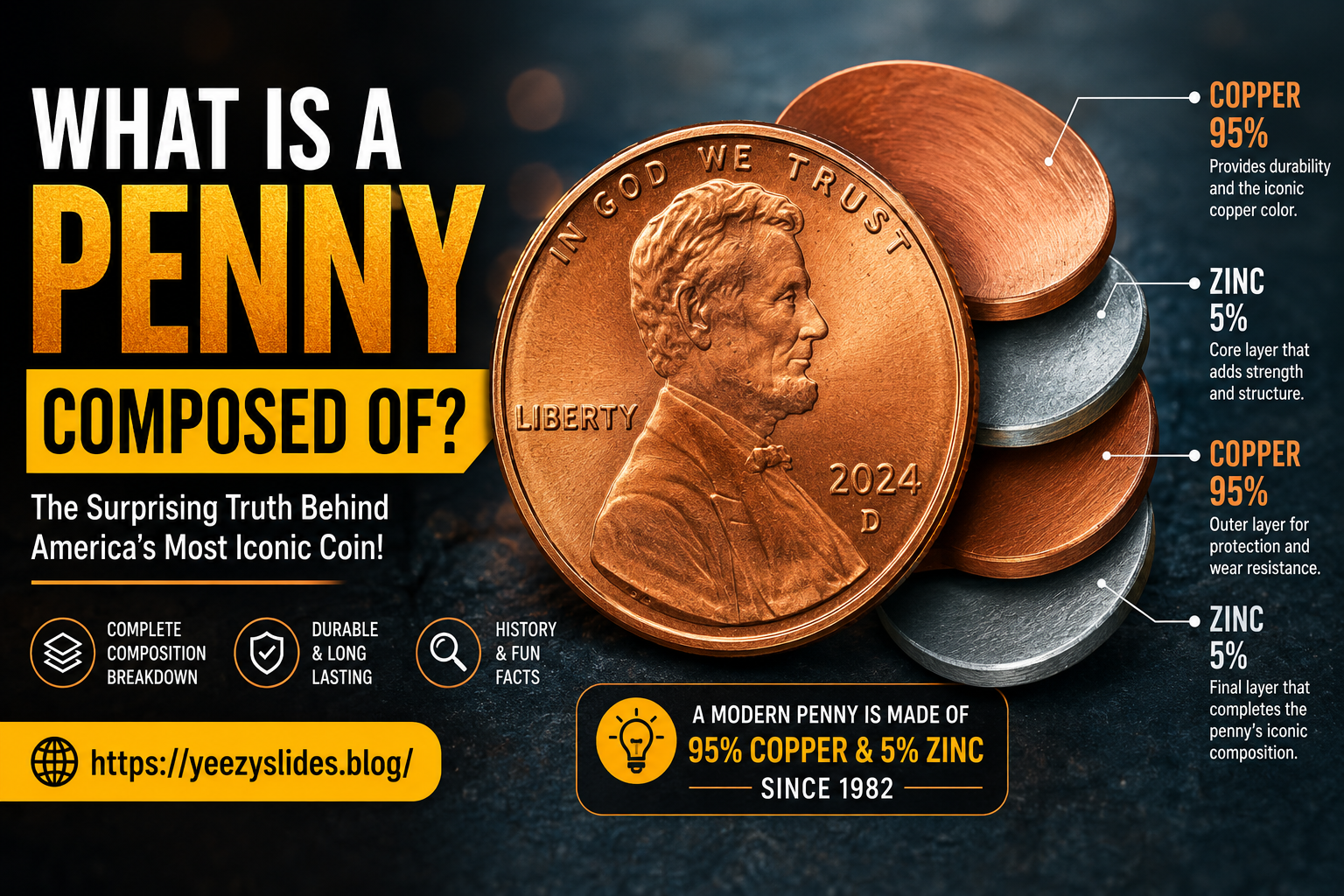
Since 1982, the United States Mint has used a specific “sandwich” of metals for the one-cent piece. Modern pennies consist of 97.5% zinc and 2.5% copper. The core is pure zinc, which is then electroplated with a thin layer of copper to maintain that iconic orange-gold glow.
Why the US Mint Switched to Zinc
In the early 1980s, the price of raw copper began to soar. It eventually reached a point where the metal inside a penny was worth more than one cent. To prevent people from melting coins for profit and to save taxpayers millions in production costs, the government shifted the primary ingredient to zinc.
A Historical Timeline of Penny Materials
Understanding what is a penny composed of requires looking back at over 200 years of history. The “recipe” has changed several times based on war, economy, and resource availability:
- 1793 – 1837: 100% pure copper.
- 1837 – 1857: 95% copper with a mix of tin and zinc.
- 1857 – 1864: 88% copper and 12% nickel (giving them a pale look).
- 1864 – 1942: 95% copper and 5% tin/zinc.
- 1943: Zinc-coated steel (The “Steelie” wartime penny).
- 1944 – 1982: Return to 95% copper.
- 1982 – Present: 97.5% zinc core with 2.5% copper plating.
The Famous 1943 Steel Penny
During World War II, copper was a critical resource for shell casings and war machinery. To support the front lines, the Mint produced pennies out of low-grade steel coated with zinc. These coins are magnetic, making them easy to distinguish from any other year.
Identifying Your Penny: Copper vs. Zinc
If you have a penny from 1982, it could be either copper or zinc. You can tell the difference by weighing them. A copper penny weighs about 3.11 grams, while the newer zinc-based penny weighs only 2.5 grams.
How the Electroplating Process Works
To achieve the final look, the Mint uses a process called electroplating. Zinc blanks are placed in a chemical bath where an electric current attaches copper ions to the surface. This ensures the coin looks traditional while remaining affordable to produce.
Current Dimensions and Weight Specifications
Every modern penny follows strict physical standards set by the US Mint:
- Diameter: 0.75 inches (19.05 mm).
- Thickness: 1.52 mm.
- Edge: Plain (no ridges/reeds).
- Weight: 2.500 grams.
The Rising Cost of Producing a Cent
Even with the switch to cheaper metals, the question of what is a penny composed of is tied to inflation. Recently, the cost of zinc and labor has risen so much that it costs over two cents to manufacture a single penny. This has sparked ongoing debates about whether the US should retire the coin entirely.
Are There Any Solid Copper Pennies Left?
While they are no longer minted, billions of 95% copper pennies remain in circulation. Many “coin roll hunters” sort through change specifically to hoard these older coins for their metal value. However, it remains illegal to melt US coinage for its raw metal content.
Fun Facts About Penny Composition
- The Smell: That “metallic” smell of a penny isn’t the metal itself, but a reaction between skin oils and the copper.
- Corrosion: If a modern penny gets a deep scratch, the zinc core will “rot” faster than the copper shell.
- Color Changes: Pennies turn brown over time due to oxidation, forming a protective layer called a patina.
FAQ: Everything You Need to Know About Penny Metals
What is a penny composed of right now?
Modern pennies are 97.5% zinc and 2.5% copper. This composition has been the standard since late 1982 to keep production costs lower.
Are pennies magnetic?
Only the 1943 steel pennies are magnetic. If a modern penny sticks to a magnet, it is likely a counterfeit or a novelty item.
Can you melt pennies for copper?
No, it is currently illegal to melt pennies or nickels in the United States for the purpose of selling the raw metal.
Why does my penny have a silver center?
If the outer copper plating is scratched or worn away, the inner zinc core—which is silver-colored—becomes visible.
What year did pennies stop being all copper?
The transition happened in 1982. Pennies minted before 1982 are 95% copper, while those after are zinc-based.
How much copper is actually in a new penny?
There is only a very thin layer of copper plating, accounting for about 2.5% of the coin’s total weight.
Conclusion
Understanding what is a penny composed of helps you appreciate the hidden history in your wallet. From the pure copper of the 1700s to the zinc-heavy coins of today, these small discs reflect the changing economic needs of the nation. Next time you find a cent on the ground, check the date—you might be holding a piece of history or a clever bit of metallurgy.