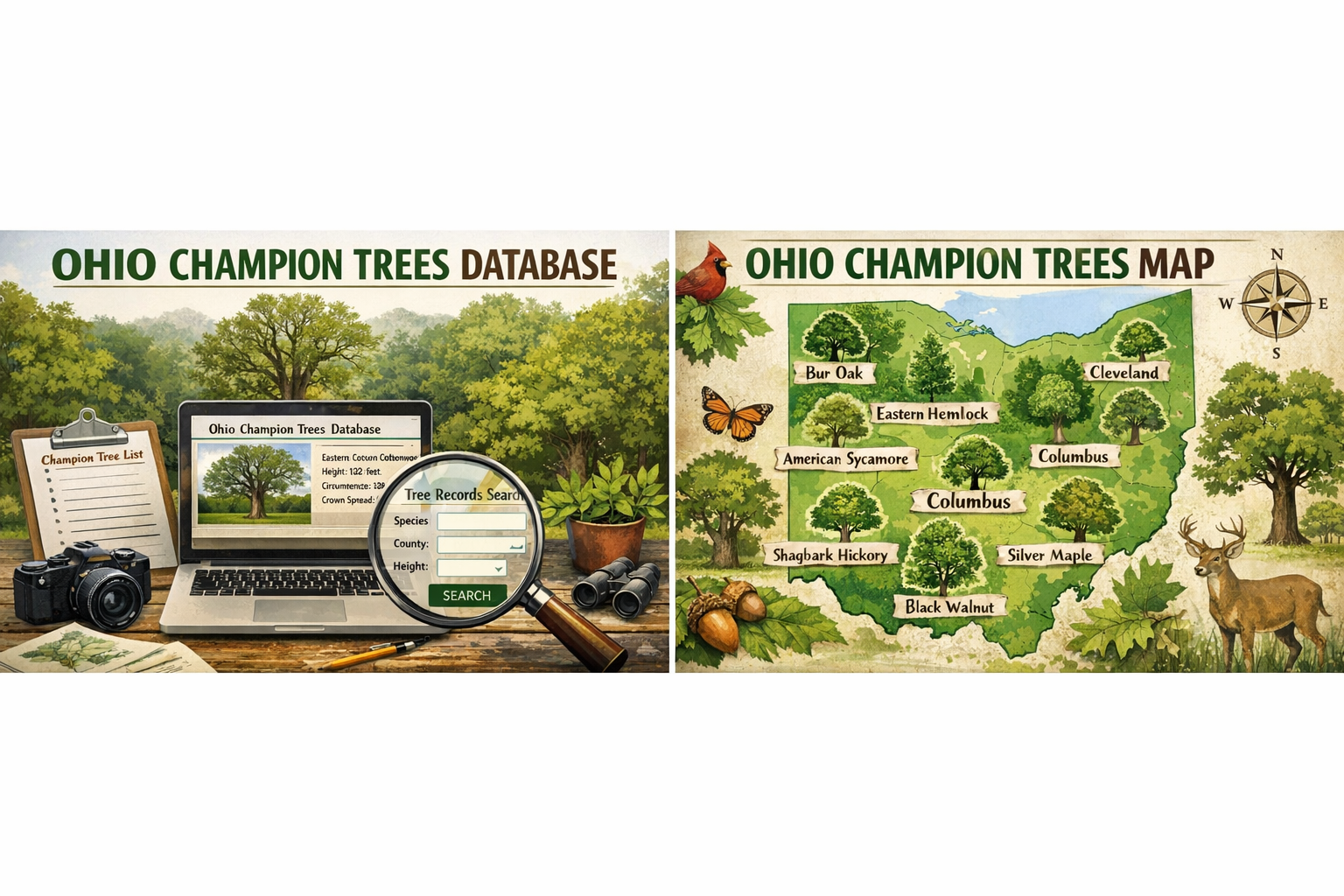
Find Giants: Use the ohio champion trees database ohio champion trees map
Discovering the Giants: Your Guide to the Ohio Champion Trees Database and Map
Have you ever stood next to a tree so big it made you feel like a tiny ant? Ohio is home to some of the most massive, breathtaking trees in the United States. These aren’t just your everyday backyard oaks or maples. These are “Champions.” To find them, nature lovers and families use two incredible tools: the ohio champion trees database and the ohio champion trees map. These resources act like a treasure map for the natural world. They lead you to the biggest, tallest, and widest living things in our great state.
Ohio has a rich history of protecting its forests. Since the 1940s, people have been searching the woods to find these giants. Whether you are a hiker, a student, or just someone who loves the outdoors, knowing how to use the ohio champion trees database and the ohio champion trees map can turn your next weekend trip into a grand adventure. Let’s dive into how these tools work and why these trees are so special to our communities.
What Exactly is the Ohio Champion Trees Database?
The ohio champion trees database is a massive list kept by the Ohio Department of Natural Resources (ODNR). Think of it as a “Hall of Fame” for trees. Every single native tree species in Ohio has a champion. There is a champion for the mighty White Oak and even a champion for the smaller Pawpaw tree. The database records the tree’s species, how big it is, and where it is located. It is updated often because new giants are discovered every year by regular people just like you.
This database uses a special scoring system to decide which tree is the “winner.” It isn’t just about being tall. A tree gets points for its height, the thickness of its trunk, and how far its branches spread out. This ensures that the true “heaviest” and most impressive trees get the title. When you look at the ohio champion trees database, you can see the history of these giants and how long they have held their crowns. It is a living record of Ohio’s natural strength.
How to Navigate the Ohio Champion Trees Map
Finding a giant tree in the middle of a forest can be tricky. That is where the ohio champion trees map comes in handy. This digital tool shows you exactly where the champions are standing. Many of these trees are located in public parks, state forests, or nature preserves. The map makes it easy to plan a road trip to see multiple champions in one day. You can zoom in on your specific county to see if there is a record-holder right in your own backyard!
Using the ohio champion trees map is very simple. Most versions of the map allow you to click on a tree icon to see a photo and its official measurements. It is important to remember that some trees are on private land. The map will usually tell you if a tree is open to the public or if you should just admire it from a distance. Always respect the land and follow the rules of the parks so these giants can stay healthy for another hundred years.
The Big Three: How Champions are Measured
To get into the ohio champion trees database, a tree has to be measured very carefully. There are three main things the experts look at. First is the circumference, which is the distance around the trunk. They measure this at about 4.5 feet off the ground. Second is the total height of the tree from the ground to the very top leaf. Third is the average crown spread, which is how wide the branches grow. All these numbers are added up to give the tree a final score.
If you find a tree that looks massive, you can actually try measuring it yourself! All you need is a long measuring tape and a friend to help. If your tree’s score is close to the one listed in the ohio champion trees database, you can even nominate it. It is a fun way to learn about math and nature at the same time. Imagine being the person who discovered the next state champion!
Meet the Current Heavyweights of Ohio
Some of the trees in the ohio champion trees map are truly world-class. For example, the American Sycamore is often one of the largest trees in the state. One famous Sycamore in Ashland County has a trunk that is over 430 inches around! That is wider than some cars! These trees have lived through hundreds of years of Ohio weather, including heavy snow and strong winds. They are symbols of survival and beauty.
Another amazing giant is the Eastern Cottonwood. These trees grow very fast and reach incredible heights. When you visit these trees using the ohio champion trees map, you can see how they tower over the rest of the forest. They provide homes for owls, eagles, and many other animals. Seeing them in person is much different than just looking at a photo. Their size is something you have to see to believe.
Why These Trees Matter to Our Environment
Champion trees are more than just big plants. They are “super-trees” that do a lot of work for our environment. Because they are so large, they can soak up huge amounts of carbon dioxide, which helps keep our air clean. Their deep roots help prevent soil from washing away during big rainstorms. By looking at the ohio champion trees database, scientists can learn which areas of Ohio have the best soil and water for growing healthy forests.
These giants also act as a seed bank. Since they have lived so long, they have strong genes. Their seeds often produce other strong trees that can handle pests and diseases. When we protect the trees found on the ohio champion trees map, we are actually protecting the future of all Ohio forests. They are the “grandparents” of the woods, and they deserve our respect and care.
How to Find Champions in Your Local County
You don’t have to drive across the state to find amazing nature. Many people are surprised to find that the ohio champion trees database includes entries from almost every county. Whether you live near the hills of Southern Ohio or the flat lands of the north, there is likely a giant nearby. You can use the search filters on the ohio champion trees map to look specifically at your local area. It is a great way to discover new parks you’ve never visited before.
Taking your kids or friends on a “Champion Tree Hunt” is a fantastic weekend activity. It gets everyone outside and moving. You can bring a camera and start a scrapbook of all the champions you find. Many of these locations are perfect for a picnic. Just remember to “leave no trace” and keep the area clean so the next visitors can enjoy the tree just as much as you did.
A Detailed Look at Ohio’s Top Champion Trees
To give you an idea of what to look for, here is a table of some current champions. These measurements show why they earned a spot in the ohio champion trees database.
🌳 Ohio Champion Trees Official Data
| Tree Name | County | Circumference | Height | Crown | Total Score | Land Type |
|---|---|---|---|---|---|---|
| American Sycamore | Ashland | 436″ | 100′ | 101′ | 561 | Private |
| Eastern Cottonwood | Delaware | 380″ | 122′ | 100′ | 527 | Public |
| Chinquapin Oak | Ross | 375″ | 66′ | 70′ | 458 | Public |
| Northern Red Oak | Ashtabula | 335″ | 92′ | 112′ | 455 | Private |
| Cucumber Magnolia | Stark | 317″ | 89′ | 85′ | 427 | Public |
| White Oak | Athens | 309″ | 88′ | 115′ | 426 | State Forest |
| Bur Oak | Franklin | 290″ | 95′ | 105′ | 411 | Public |
| Tuliptree | Hocking | 255″ | 160′ | 75′ | 434 | State Park |
Tips for Visiting Trees on Private vs. Public Land
When you use the ohio champion trees map, you will notice that some locations are very specific and others are a bit blurry. This is because some champions grow on private property. For trees on public land, like state parks, you can usually walk right up to them. For trees on private land, it is very important to ask for permission before entering. Most owners are proud of their champion trees and might even give you a tour if you ask nicely!
If a tree is on private property and you can’t get permission, don’t worry. There are hundreds of other giants on the ohio champion trees map that are in public spaces. Places like the Hocking Hills, the Cuyahoga Valley National Park, and various state forests are filled with massive trees that are easy to get to. Always stay on marked trails to protect the roots of the trees you are visiting.
How You Can Help the Ohio Big Tree Program
The ohio champion trees database stays accurate because of volunteers. If you see a tree that has fallen over or looks sick, you can report it to the ODNR. This helps them keep the list up to date. You can also help by planting new trees in your own yard. While your new sapling won’t be a champion today, it could be the champion tree for your grandchildren in a hundred years!
Supporting local conservation groups is another great way to help. These groups work hard to buy land and protect the areas where these giant trees grow. When we protect the land, we ensure that the ohio champion trees map stays full of healthy, living icons. Every little bit of help counts when it comes to preserving our natural heritage.
Bringing the Classroom Outdoors
Teachers often use the ohio champion trees database to teach students about biology and history. These trees are living history books. A tree that is 300 years old was alive before Ohio even became a state! By visiting these sites, students can see the scale of nature in a way that a textbook just can’t show. It makes learning fun and memorable.
If you are a parent, you can use the ohio champion trees map to teach your children about different species. You can show them how the bark of a Black Walnut looks different from the bark of a White Oak. It’s a hands-on way to connect with the world. Plus, it’s a healthy way to spend time together away from screens and phones.
Summary: Start Your Adventure Today
The world of big trees is waiting for you. By using the ohio champion trees database and the ohio champion trees map, you have all the information you need to find the giants of the Buckeye State. These trees are a source of pride for Ohioans and a reminder of the power of nature. They have stood the test of time, and now it is our turn to appreciate and protect them.
So, grab your hiking boots, download the map, and head out into the woods. Whether you find a state champion or just a really big tree in your local park, the experience of being near these giants is something you won’t forget. Ohio is a beautiful state, and its champion trees are the crown jewels of our natural landscape.
Frequently Asked Questions (FAQs)
1. How often is the Ohio champion trees database updated?
The database is usually updated once a year. This happens after foresters have time to visit and verify new nominations sent in by the public. If a champion tree dies or falls, it is removed, and the next largest tree takes its place.
2. Can I nominate a tree in my own yard?
Yes! If you think your tree is a giant, you can measure it and send the info to the ODNR. They provide a simple form online. If your tree has enough points, it could be added to the official ohio champion trees database.
3. Are all trees on the map open to the public?
No. Some trees are on private land. The ohio champion trees map will usually indicate if a tree is in a public park. If it is on private land, you must get permission from the owner before visiting to avoid trespassing.
4. What is the biggest tree in Ohio right now?
Currently, the American Sycamore in Ashland County is the highest-scoring tree. It has a massive circumference and a wide crown spread, giving it the most points in the entire ohio champion trees database.
5. Why do they measure the crown spread?
The crown spread shows how much shade and habitat a tree provides. A tree with a very wide spread is often older and healthier. Adding this to the height and circumference gives a better “picture” of the tree’s true size.
6. Is there a national version of this list?
Yes, there is a National Register of Champion Trees. Many of the trees you find on the ohio champion trees map are also national champions! Ohio is famous for having some of the largest specimens in the entire country.
s