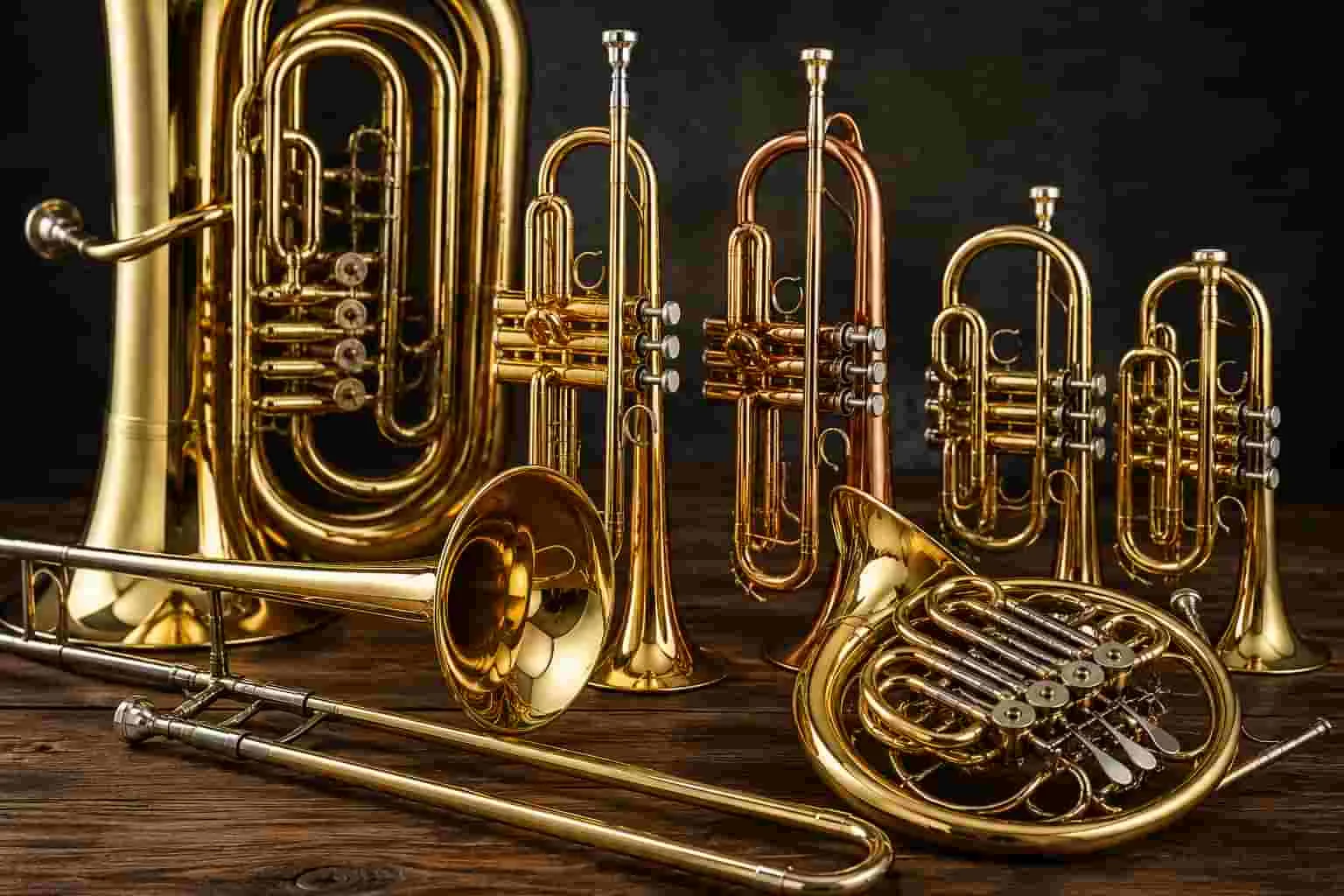
Brass Instruments Guide: Types, Sound & How to Choose
Choosing among brass instruments can feel like stepping into a loud, shiny maze. Buy the wrong horn and your embouchure fights back every day. Poor technique locks you out of the warm, singing tone you hear in your head. This guide clears away the noise. You will see exactly how brass instruments create sound, compare every major type side by side, and walk away knowing which one fits your body, your budget, and the music you love
What Are Brass Instruments and How Do They Make Sound?
Brass instruments are wind instruments that turn the buzz of your lips into rich, powerful music. You do not blow air into them the way you blow into a recorder. Your lips vibrate against a metal mouthpiece, and that buzzing pulse travels through a coiled tube and out a flared bell.
The material matters, but not in the way beginners assume. The body of most brass instruments is yellow brass—an alloy of copper and zinc. Some horns add nickel silver or gold brass in specific parts to darken the tone or increase projection. The real engine is the player’s lip vibration, which acts like a pair of fleshy reeds. According to Arthur H. Benade’s classic book Fundamentals of Musical Acoustics, the lips function as a controlled oscillator that excites the air column inside the tube. Change the tension in your lips and you jump to a different harmonic.
Because brass instruments rely entirely on the harmonic series, they need a way to fill in the missing notes. That brings us to valves and slides.
How Valves and Slides Change Pitch
A brass instrument without valves or a slide can only play a limited set of notes—mainly bugle calls. To unlock a full chromatic scale, manufacturers add lengths of tubing that the player engages on demand.
- Piston valves (trumpet, euphonium, tuba) move up and down, rerouting air through extra crooks. Press the first valve and you drop the pitch by a whole step. Press the second and you get a half step. The third valve drops it by a minor third.
- Rotary valves (French horn, certain tubas) spin a disc inside a casing to redirect air. They feel quick and seamless under the fingers but require a different type of maintenance.
- Slide (trombone) gives you infinite pitch control. Instead of buttons, you move a telescoping outer slide. No two trombone notes feel exactly the same because you micro-adjust with your ear.
The Cambridge Companion to Brass Instruments notes that the modern valve was perfected in the early 1800s, liberating brass instruments from their natural harmonic prison. Suddenly composers could write singing melodies across the entire range.
The Main Types of Brass Instruments
The brass family splits roughly into high voices, middle voices, and bass voices. Below is a quick-reference table before we dig into each instrument.
| Instrument | Key | Bore Size | Typical Range | Sound Character | Common Genres |
| Trumpet | B♭ | Medium | F♯3 – C6 | Brilliant, cutting | Jazz, orchestral, pop |
| Cornet | B♭ | Medium-small | F♯3 – C6 | Mellow, round | Brass bands, concert band |
| Flugelhorn | B♭ | Medium-large | F♯3 – C6 | Soft, velvety | Jazz ballads, pop |
| Trombone | B♭/F | Large | E2 – B♭4 | Powerful, vocal | Orchestral, big band, ska |
| French Horn | F/B♭ | Small | B1 – F5 | Noble, mellow | Orchestral, chamber |
| Euphonium | B♭ | Medium-large | E2 – B♭4 | Warm, rich | Brass band, military band |
| Tuba | BB♭/CC | Very large | D1 – F4 | Deep, sonorous | Orchestral, marching |
Trumpet and Cornet: Brilliant High Voices
The trumpet owns the melody in everything from a symphony orchestra to a Miles Davis solo. It projects with a bright, laser-like focus that cuts through a full ensemble. Most beginner trumpets pitch in B♭, but orchestral players often switch to a C, E♭, or piccolo trumpet for baroque repertoire.
The cornet looks like a stubby trumpet, yet its leadpipe and bore taper more gradually. That conical shape filters out the upper overtones and leaves a softer-edged, singing tone. You will hear cornets leading the melody in traditional British-style brass bands, while trumpets handle jazz and orchestral fanfares. Yamaha’s instrument guide highlights that a deeper mouthpiece cup on the cornet further darkens the sound, making it forgiving for younger players.
Trombone: The Sliding Powerhouse
No other brass instrument gives you the raw, vocal expressiveness of a trombone. The hand slide lets you swoop, glissando, and fine-tune each pitch by ear. Tenor trombones in B♭ remain the standard choice for beginners, while bass trombones (with an extra trigger for lower notes) anchor orchestral brass sections.
Christian Lindberg, arguably the most famous classical trombonist, proved the instrument could handle virtuosic solo work that once belonged only to the violin. In jazz, the trombone growls and wails, pushed by players who manipulate the slide and cup mute together. A review of brass pedagogy by the International Trombone Association stresses that daily long-tone exercises on the slide build a reliable inner sense of pitch that valve players often skip.
French Horn: The Mellow and Noble Middle Voice
The French horn wraps over 12 feet of narrow tubing into a tight coil, ending in a big bell you rest your right hand inside. That hand position colors every note, letting a skilled player move from a velvet hum to a brassy blare. The horn’s wide harmonic range leaves notes sitting close together in the upper register, so accuracy demands laser-focused embouchure work.
Double horns in F and B♭ give the player two complete valve machines in one instrument, triggered by a thumb key. This design solves the high-register cracking that plagued early single horns. The sound defines film scores from John Williams to Hans Zimmer, evoking heroism and distant forests.
Tuba and Euphonium: The Deep Foundation
The tuba provides the floor that every band and orchestra stands on. A BB♭ or CC tuba pushes air through 16 to 18 feet of tubing, and the bell can measure up to 20 inches across. Despite its size, the tuba can purr softly enough to mix with a string section.
The euphonium sits an octave above the tuba, in the tenor-bass range, and is often called the cello of the brass band. Its conical bore and large mouthpiece create a dark, buttery tone that blends seamlessly with woodwinds. In the hands of a British brass band soloist, the euphonium sings melodies as expressive as any opera aria.
Specialized Brass Instruments Worth Knowing
Beyond the standard lineup, a few unique brass instruments turn up in specific settings.
- Flugelhorn: The jazz ballad’s secret weapon. Wider tubing than a trumpet, a deep V-shaped mouthpiece, and a soft bell flare produce a breathy, intimate sound.
- Piccolo trumpet: Half the length of a standard trumpet. Baroque players use it for Bach’s Brandenburg Concerto No. 2.
- Sousaphone: A marching tuba that wraps around the body. John Philip Sousa designed it to project forward during parades.
- Cimbasso: A valved contrabass trombone that Verdi loved. It gives operatic brass sections a gritty, articulated bottom end.
- Mellophone: A marching-band substitute for the French horn, with forward-facing bell and simpler fingering patterns.
Brass Instruments in Jazz, Classical, and Pop Music
Brass instruments shift their character depending on the genre.
- Jazz: Trumpet and trombone carry solos. Mutes—plunger, cup, harmon—sculpt growls, whispers, and vocal cries. The rhythm section pushes behind a screaming lead trumpet.
- Classical: Orchestral brass sections stack horns, trumpets, trombones, and tuba for massive climaxes. Horns play long, connected chorales; trumpets deliver precise fanfares.
- Marching bands: Bells face forward for projection. Sousaphones and mellophones replace concert tubas and horns to survive outdoor conditions.
- Pop and soul: Earth, Wind & Fire and Chicago built horn sections that hit tight stabs and punchy accents. Flugelhorn and trumpet blend to soften the edge.
Research published in the Journal of the Acoustical Society of America demonstrated that bell flare and throat geometry directly shape a brass instrument’s directivity and projection—explaining why a concert tuba blends, while a sousaphone throws sound out to the football stands.
How to Choose Your First Brass Instrument
Pick the instrument that matches your physical comfort and the sound you crave, not the one that looks easiest.
- Test the mouthpiece first. A trumpet mouthpiece feels shallow and cup-like. A tuba mouthpiece feels like a large cushion. If you produce a steady buzz on a trumpet mouthpiece without strain, your lips are already cooperating.
- Hold the instrument. Small hands often struggle with a full-size trombone slide. A cornet’s compact shape suits younger players who find a trumpet too long and front-heavy.
- Consider your ears. If you love deep, rumbling vibrations, go straight to euphonium or tuba. If high, nimble melodies excite you, choose trumpet or cornet.
- Factor in weight. A French horn puts much of its weight on the right hand. A marching baritone hangs heavy but can be supported with a harness.
- Think about community. Cornets fit neatly into brass bands. Trumpets are everywhere. If you want to play in a local orchestra, French horn and trombone players are always in demand.
Conn-Selmer’s educational division reports that students who choose an instrument they genuinely enjoy hearing stick with lessons twice as long as those pushed into a “practical” choice.
Essential Playing Techniques for Brass Instruments
Mastery starts with the body, not the horn.
- Embouchure: Form a firm but flexible seal around the mouthpiece. The corners of your mouth lock in place while the center buzzes freely. Think “M” shape, not a stretched smile.
- Breathing: Fill from the bottom of your lungs, letting your stomach and ribcage expand. A slow, warm exhale powers a steady tone. The Breathing Gym exercises, developed by tuba legends Sam Pilafian and Patrick Sheridan, train wind power without the instrument.
- Articulation: The tongue acts as a valve. Tap the back of your upper teeth with a “too” or “doo” syllable to separate notes cleanly. Double-tonguing (“tuh-kuh”) lets you rip through fast jazz passages.
- Buzzing practice: Buzz your mouthpiece alone for five minutes a day. Match pitch with a piano. This isolates lip vibration and reveals tension you might hide behind the instrument’s resonance.
Care and Maintenance for Your Brass Instrument
A clean horn plays in tune and stays free of ugly corrosion.
- Daily: Empty the water key after every session. Wipe fingerprints off the lacquer with a soft microfiber cloth. Oil valves or slide grease sparingly.
- Weekly: Brush your mouthpiece with warm water and a mouthpiece brush. Soak it in a mild detergent solution to dissolve buildup.
- Monthly: Run a snake brush through the leadpipe and tuning slides. Apply fresh slide grease on all tuning slides.
- Quarterly: Give the whole horn a bath in lukewarm water with a few drops of gentle dish soap. Rinse thoroughly, dry completely, and re-grease all moving parts.
Do not use hot water—it can soften soldered joints and strip lacquer. Silver-plated instruments benefit from a treated polishing cloth, while raw brass needs a dedicated brass polish used sparingly.
Famous Brass Players Who Shaped Music
These names appear in every practice room because they unlocked something new on their brass instruments.
- Louis Armstrong (trumpet): Flipped jazz from collective improvisation to solo virtuosity. His fat, swinging tone and stratospheric high notes reset the trumpet’s role forever.
- Miles Davis (trumpet): The master of space. He used a Harmon mute and sparse phrasing to make a single bent note hurt more than a blizzard of 16th notes.
- Dennis Brain (French horn): Gave the horn a solo voice that rivaled the violin. His recordings of Mozart’s horn concertos remain the benchmark.
- Christian Lindberg (trombone): Commissioned over 300 new works and played a concerto while riding a Segway—sheer musical athleticism.
- Arnold Jacobs (tuba): The legendary Chicago Symphony tubist who treated the horn as a large singer’s larynx. His breathing philosophy influences brass pedagogy worldwide.
Building Your Brass Instrument Skills Over Time
Progress follows a predictable arc if you respect the fundamentals.
- Weeks 1–4: Build the buzz. Play long tones on mouthpiece and open notes on the horn. Aim for steady pitch and relaxed shoulders.
- Months 1–3: Add simple scales and nursery tunes. Focus on clean articulation and full inhale before every phrase.
- Months 3–6: Expand range gradually. Lip slurs—sliding between harmonics without tonguing—teach your embouchure to navigate intervals efficiently.
- Year 1 and beyond: Join a community ensemble. Playing with others forces rhythmic discipline and dynamic control. Record yourself monthly; the microphone never lies.
Frequently Asked Questions About Brass Instruments
What kinds of brass instruments are there?
The standard family includes trumpet, cornet, flugelhorn, trombone, French horn, euphonium, and tuba. Specialized members like the sousaphone, piccolo trumpet, and cimbasso show up in marching and operatic settings.
How do brass instruments produce sound?
Your lips buzz inside a cup-shaped mouthpiece, creating a standing wave inside the tubing. The vibrating air column amplifies specific harmonics, and valves or a slide lengthen the air path to change pitch.
Which brass instrument is easiest to learn?
Trumpet and cornet often feel most accessible because they are compact and the mouthpiece fits smaller lips naturally. The real answer depends on your body—some beginners find the trombone’s slide more intuitive than valves.
How frequently should my brass instrument be cleaned?
Wipe and empty spit after each session. Wash the mouthpiece weekly. A full-body bath every two to three months removes sludge and prevents calcium deposits from altering the bore.
What is the difference between a trumpet and a cornet?
A trumpet has a cylindrical bore for more than half its length, producing a brilliant, focused tone. A cornet’s conical bore widens gradually, smoothing out upper harmonics into a mellower, rounder voice.
Can I play brass instruments with braces?
Yes. Use orthodontic wax on brackets and reduce mouthpiece pressure. Many young players switch to a larger, more cushioned mouthpiece temporarily and build lip strength through free buzzing away from the metal.